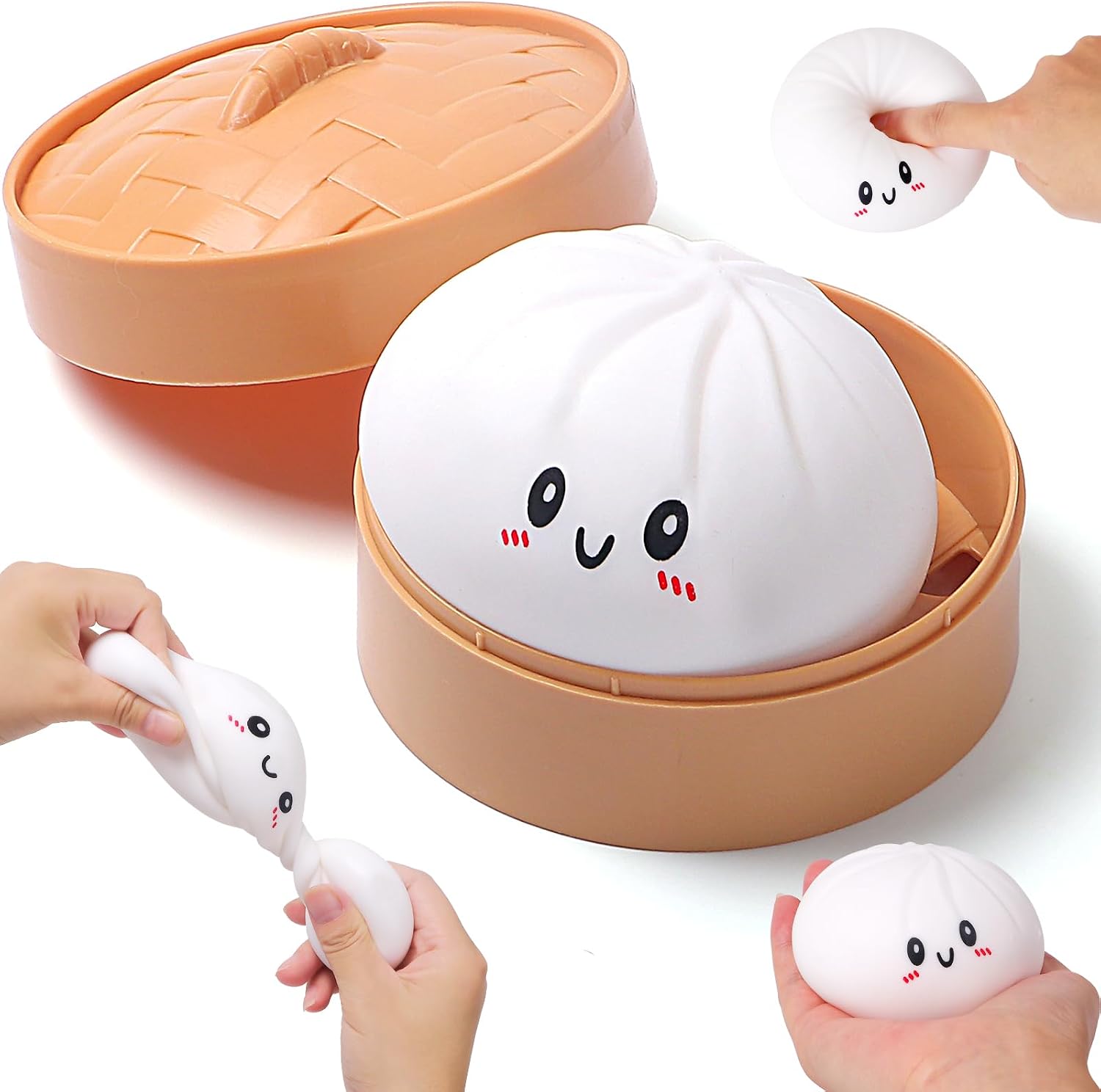
Check the seller or maker’s care instructions before washing any squishy. Construction and materials vary.
The safest cleaning method for a washable TPR dumpling squishy is almost boring. Use lukewarm water, a tiny amount of mild dish soap, a gentle hand wash, and plenty of air-drying time. Skip the clever cleaning hacks. Heat and harsh chemicals are harder on an elastic toy than ordinary dirt is.
Check the packaging first. Manufacturer instructions win, especially for foam, fabric-covered, electronic, scented, or filled toys. If the material is unknown, use the surface-wipe method below.
Before water, inspect the toy
Look along the bottom seam and between the molded pleats. Stop if you find a split, pinhole, thin translucent patch, sticky seepage, or loose decoration.
Cleaning cannot make a breached shell safe again. Put a leaking toy out of reach and follow its recall or disposal instructions. Do not squeeze it to identify the fill. The squishy safety guide explains why the contents and traceability matter.
For washable TPR or silicone: a gentle hand wash
- Fill a small bowl with lukewarm water. Hot water can soften or distort some polymers.
- Add one small drop of mild, unscented dish soap.
- Wet the surface and rub it gently with clean fingers for 20 to 30 seconds. Do not stretch the pleats or dig at the seam.
- Rinse briefly under lukewarm water until no soap remains.
- Pat dry with a clean towel. Do not wring or twist it.
- Leave it in open air until fully dry before returning it to a box or drawer.
This is a light surface wash, not a long soak. Water trapped inside a damaged or hollow toy creates a new problem. If the instructions say “surface clean only,” follow them.
For foam: keep the water on the cloth
Slow-rise polyurethane foam is porous. Soaking it can leave moisture inside, lift printed coatings, and lengthen drying time. Use a clean cloth barely dampened with water and mild soap. Wipe a small hidden spot first, then the dirty area. Follow with a second damp cloth and air-dry uncovered.
Unsure whether yours is foam or TPR? Foam feels dry and compresses slowly. TPR feels rubbery, stretches more, and rebounds quickly. The squishy glossary has a fuller material comparison, while What Is a Dumpling Squishy? covers the category basics.
What not to use
Avoid bleach, rubbing alcohol, acetone, household disinfectant spray, abrasive scrubbers, and essential oils unless the manufacturer explicitly approves them. A cleaner can dull a coating or weaken the shell without leaving obvious damage at first.
Do not use a dishwasher, washing machine, hair dryer, heater, microwave, or hot dashboard. The CPSC’s toy-safety guidance stresses following age labels and safety information. A viral hack does not override the instructions that came with the toy.
If illness-related disinfection is the goal, contact the manufacturer for an approved product and contact time. A method that merely makes a toy look clean is not automatically a validated disinfecting process.
Tackiness, lint, and stubborn marks
First wash away skin oil and loose dirt using the gentle method. If the toy remains unusually tacky once dry, the surface may be changing rather than staying dirty. Do not repeatedly scrub it or coat it in powder without the maker’s approval.
Ink, dye transfer, and marker can become part of a soft polymer’s surface. Strong solvent may remove the mark and damage the toy. A faint stain is usually a better outcome than a weakened shell.
Lint returns quickly when a TPR toy lives loose in a bag. Store the clean, dry toy in its own ventilated container. Keep it away from sharp pencils, keys, direct sun, and other soft plastics that may stick to it.
When cleaning turns into retirement
A normal wash is worthwhile when the toy is intact and only dusty. Retire it when the shell leaks, the seam opens, pieces detach, a strong odor persists, or the surface keeps weeping after drying. The dumpling squishy lifespan guide has a quick inspection routine.
For a replacement, compare materials and formats in the best dumpling squishies guide. The mini-versus-giant guide also explains why smaller pieces need more careful age and storage checks.