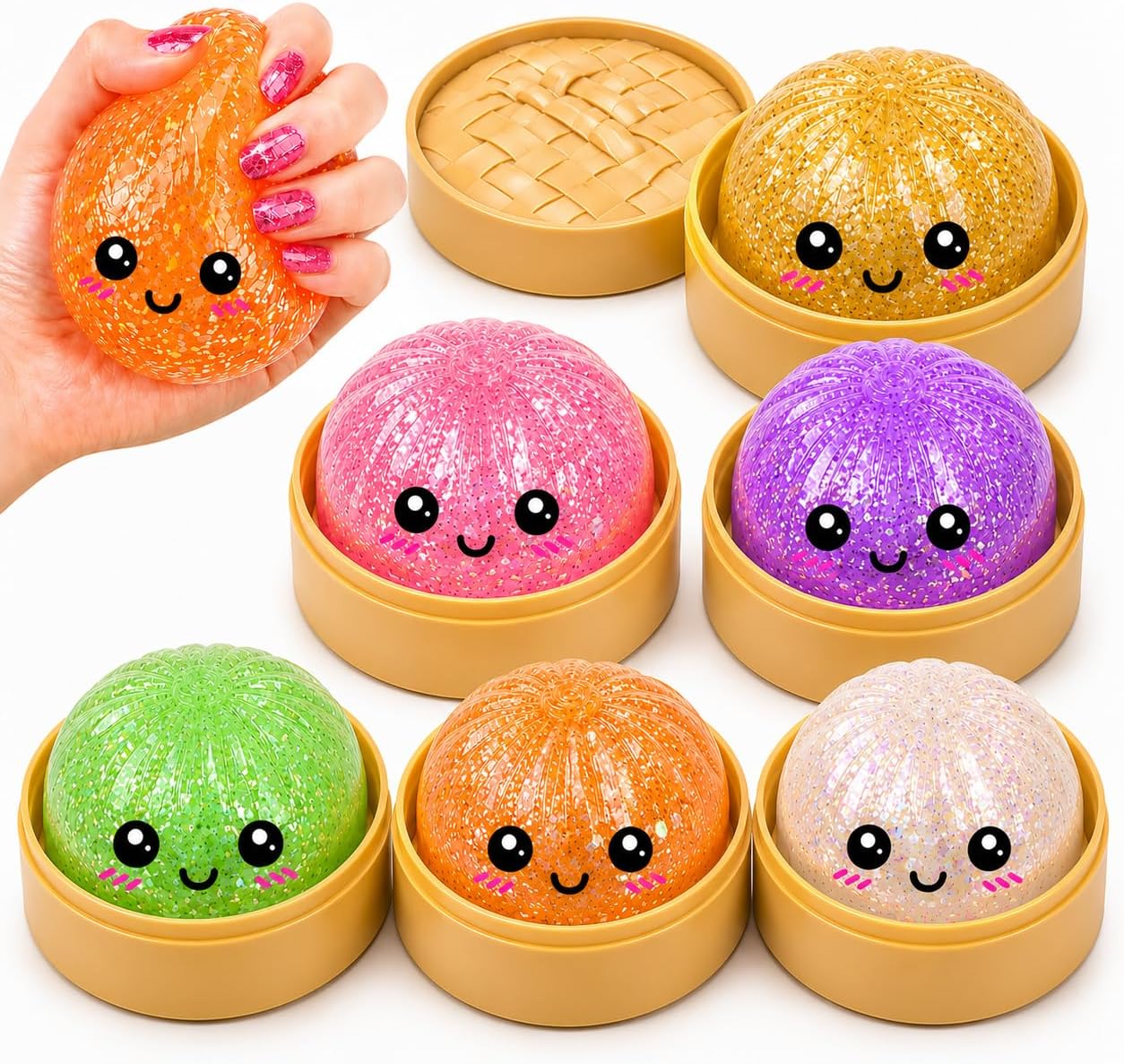
Mystery assortments vary by seller. Check the quantity, possible colors, and selection terms on the current listing.
A dumpling squishy mystery box gives the seller one decision you might prefer to make yourself: which color goes in the parcel. Sometimes that surprise is the fun. Sometimes it is a vague product page wearing a collector’s hat.
Before buying, find out what is actually random. It may be the color, face, glitter treatment, size, packaging, or all five. “Mystery box” does not automatically mean a sealed collectible series with published odds.
Read the offer as a contract
Start with the quantity selector and variant name, not the hero photo. A picture may show an entire color family while the price buys one random piece. Check these details:
- number of toys included;
- size of each toy in inches or centimeters;
- fixed color versus random color;
- whether duplicate protection is stated in writing;
- whether the assortment has named designs and disclosed odds;
- seller, importer, age grade, and return policy.
Save a screenshot of the selection you ordered. Marketplace titles and images change, and the order confirmation may preserve less detail than the live page.
Random does not mean rare
Words such as “secret,” “chase,” and “rare” are useful only when the series and odds are clear. If a seller does not publish a pull rate, do not invent one from reviews. A gold-colored toy is not evidence of scarcity by itself.
The Federal Trade Commission advises shoppers to compare sellers and read shipping, return, and refund terms when buying online. Its online shopping guidance is particularly relevant when a listing has a short history or ships from an unfamiliar marketplace seller.
Buy the ordinary designs you can see. Treat a rare pull as a bonus, never the reason the price makes sense.
Expect duplicates unless promised otherwise
Independent random picks can repeat. Ordering four boxes does not guarantee four colors. Even “assorted” may describe the seller’s stock rather than your individual order.
Collectors have three sensible options. Choose a listing with a written no-duplicate promise, buy a complete set, or trade duplicates after opening. Repeatedly ordering singles is the least predictable route and can cost more than the set you wanted.
If the recipient cares about one exact color, skip mystery packaging. The best dumpling squishies guide includes fixed and random formats, making the tradeoff easier to see.
Check the toy, not just the unboxing
Steamer-style packaging is cute, but it tells you little about the material inside. Look for an identifiable manufacturer or importer, an age grade, warnings, and specific testing information. “Non-toxic” is not enough on its own.
The CPSC says children’s toys sold in the United States must meet applicable safety requirements and, where required, be tested by a CPSC-accepted laboratory. Its toy-safety FAQ explains the certification framework.
When the box arrives, inspect the squishy before handing it over. Return a toy with a split shell, leaking fill, loose part, or persistent strong solvent odor. Read the broader squishy safety guide for recall checks and age-specific advice.
Match the format to the buyer
For a first squishy: buy one fixed design or a small two-pack. You are testing the feel, not building a collection.
For a collector: favor a defined series, real assortment images, and written duplicate rules. Keep the box only if packaging condition matters to you.
For party favors: choose a disclosed multipack. Individual mystery boxes add packaging cost without guaranteeing variety.
For a young child: follow the age grade and skip tiny pieces or loose accessories. The mini-versus-giant guide explains why “bigger” and “safer” are not perfect synonyms.
After opening
Mystery packaging does not change basic care. Keep the toy away from mouths, pets, heat, and sharp objects. Use the dumpling squishy cleaning guide for material-specific care, and retire damage using the lifespan checklist.
New to the category? What Is a Dumpling Squishy? explains TPR, fills, and rebound. The squishy glossary decodes blind-box terms without the sales pitch.